What causes striped marks on concrete after pressure washing
Striped marks after pressure washing are almost always the result of the cleaning wand moving in overlapping passes at different speeds, leaving some concrete cleaner than the rest. The common belief is that the stripes are permanent stains or that the concrete was damaged, but the more usual explanation is uneven cleaning: the water removed dirt from some bands and left it on others, so the surface now reads as light and dark lanes.
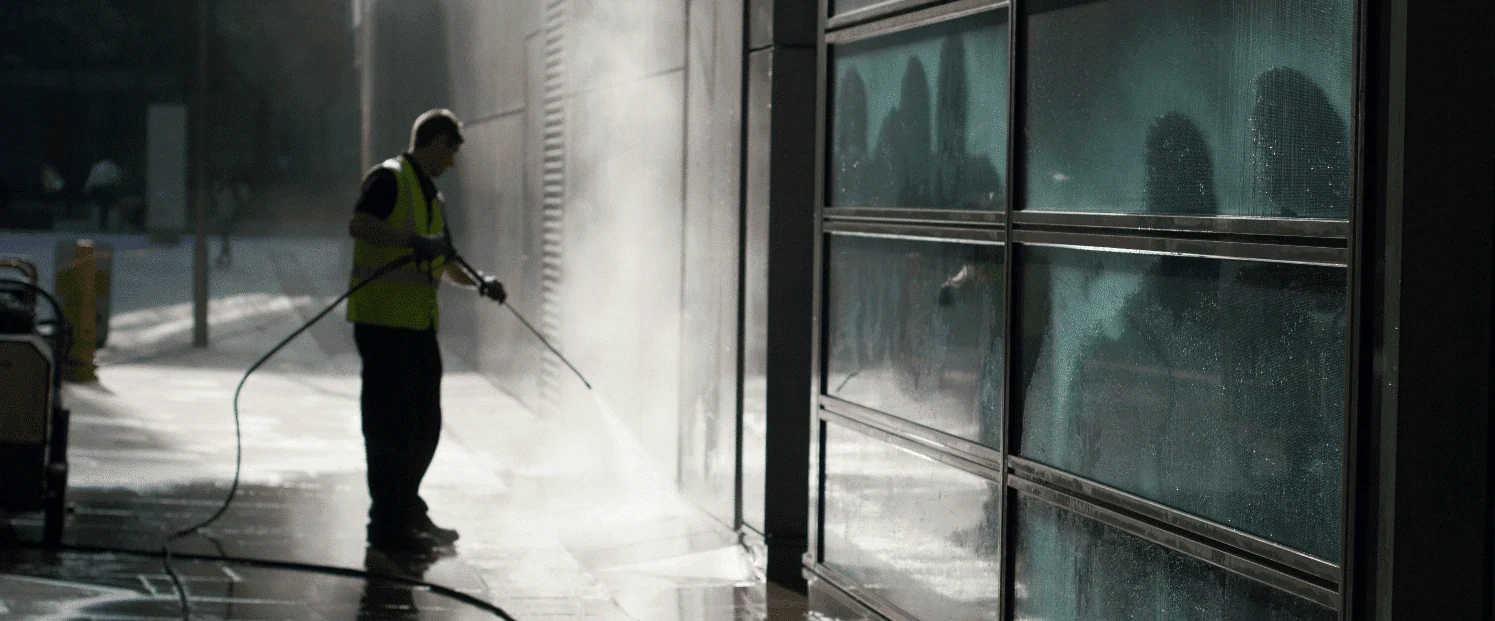
Concrete is porous. It holds a layer of dirt, pollen, tire dust, and a thin film of mineral deposits. When a pressure washer passes over it, the water lifts that layer. Where the wand lingers, more comes off. Where it moves fast, less comes off. The result is a visible pattern that follows the path of the wand, not the shape of the slab.
The stripes can also come from a surface cleaner that was pushed too quickly, from a nozzle that was too narrow, or from a pre-treatment that was applied in strips and then not fully rinsed. All of these are cleaning patterns, not structural damage.
- Short version: Stripes are uneven cleaning, not permanent stains.
- They usually fade as the concrete dries and the remaining dirt redistributes.
- They are more visible on older, more porous concrete.
- A second, even pass with a wider nozzle or a surface cleaner removes them.
Why the stripes show up more on some driveways than others
Stripes are more visible on concrete that is older, more porous, or has never been sealed. A new, smooth, sealed slab hides the difference between a cleaned band and an uncleaned one. An older slab with a chalky surface and years of embedded dirt shows every pass of the wand.
Jacksonville's climate adds to it. The area gets heavy pollen in spring, regular rain that carries sand and organic matter onto driveways, and enough humidity that a thin film of algae or mildew can grow on the surface. That film is not uniform. It grows thicker in the shade, along the edges, and in the low spots where water sits. When a pressure washer goes over it, the thick areas come off in patches and the thin areas come off in streaks. The pattern that is left can look like stripes even when the cleaning was even.
Another cause is a surface that was previously sealed or painted. A sealer can wear unevenly, and pressure washing can lift some of it while leaving the rest. That produces a mottled or striped look that has nothing to do with dirt. In that case, the fix is not more pressure. It is stripping the remaining sealer or recoating the surface.
The pressure was too high, or the nozzle was too narrow
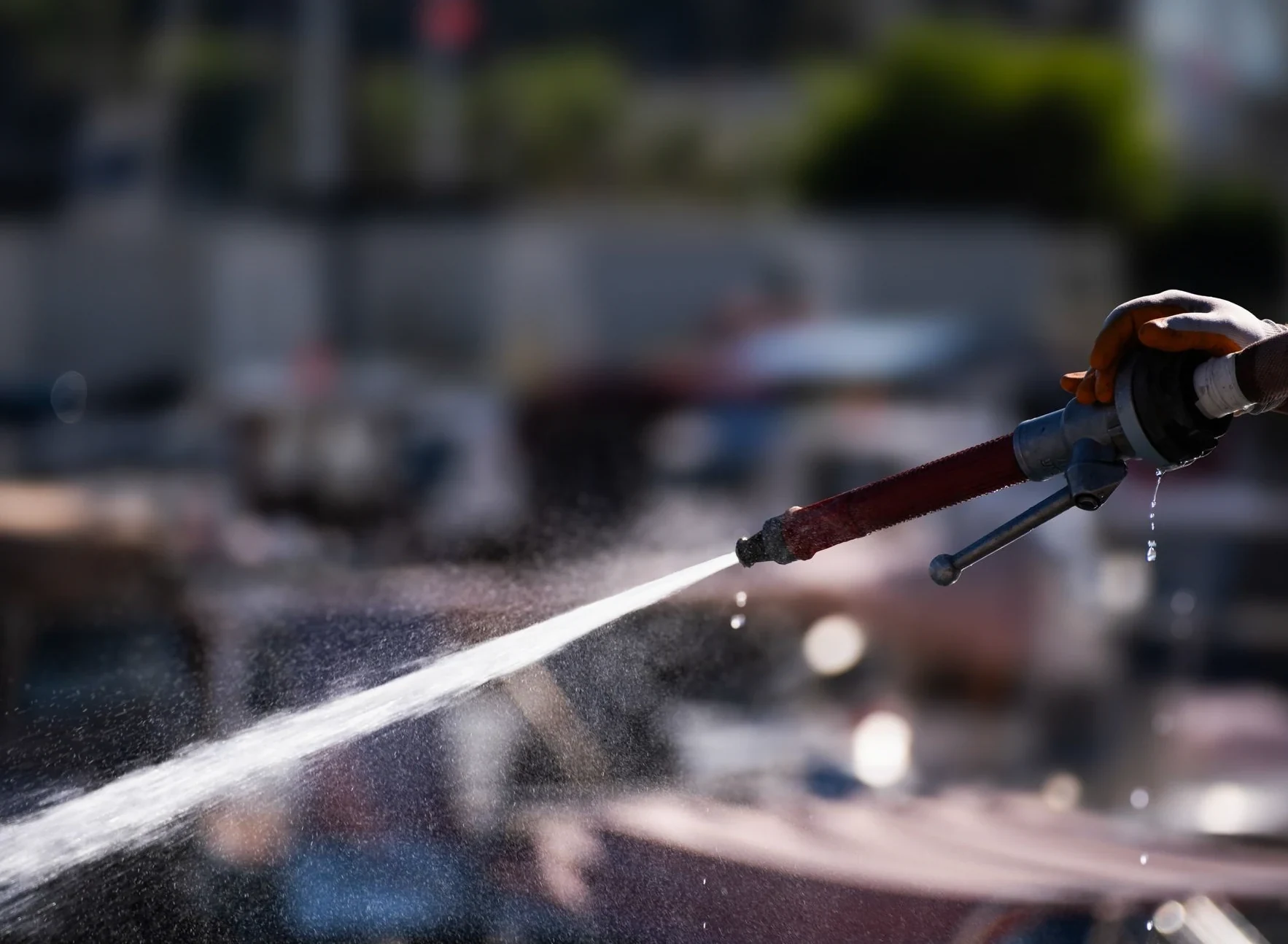
High pressure and a narrow nozzle leave sharper stripes than low pressure and a wide nozzle. The narrower the spray fan, the smaller the area it cleans, and the easier it is to leave a hard edge between one pass and the next. A 15-degree nozzle on a residential driveway will cut a visible line if the operator does not keep the wand moving at a steady pace.
Pressure that is too high does something else: it can etch the concrete. Etching is a real change to the surface, not just a cleaning pattern. It looks like a lighter, rougher band where the cement paste has been worn away. Etching does not fade the way a cleaning stripe does. If you run your hand over the stripe and it feels rougher and more porous than the surrounding concrete, the surface has been abraded.
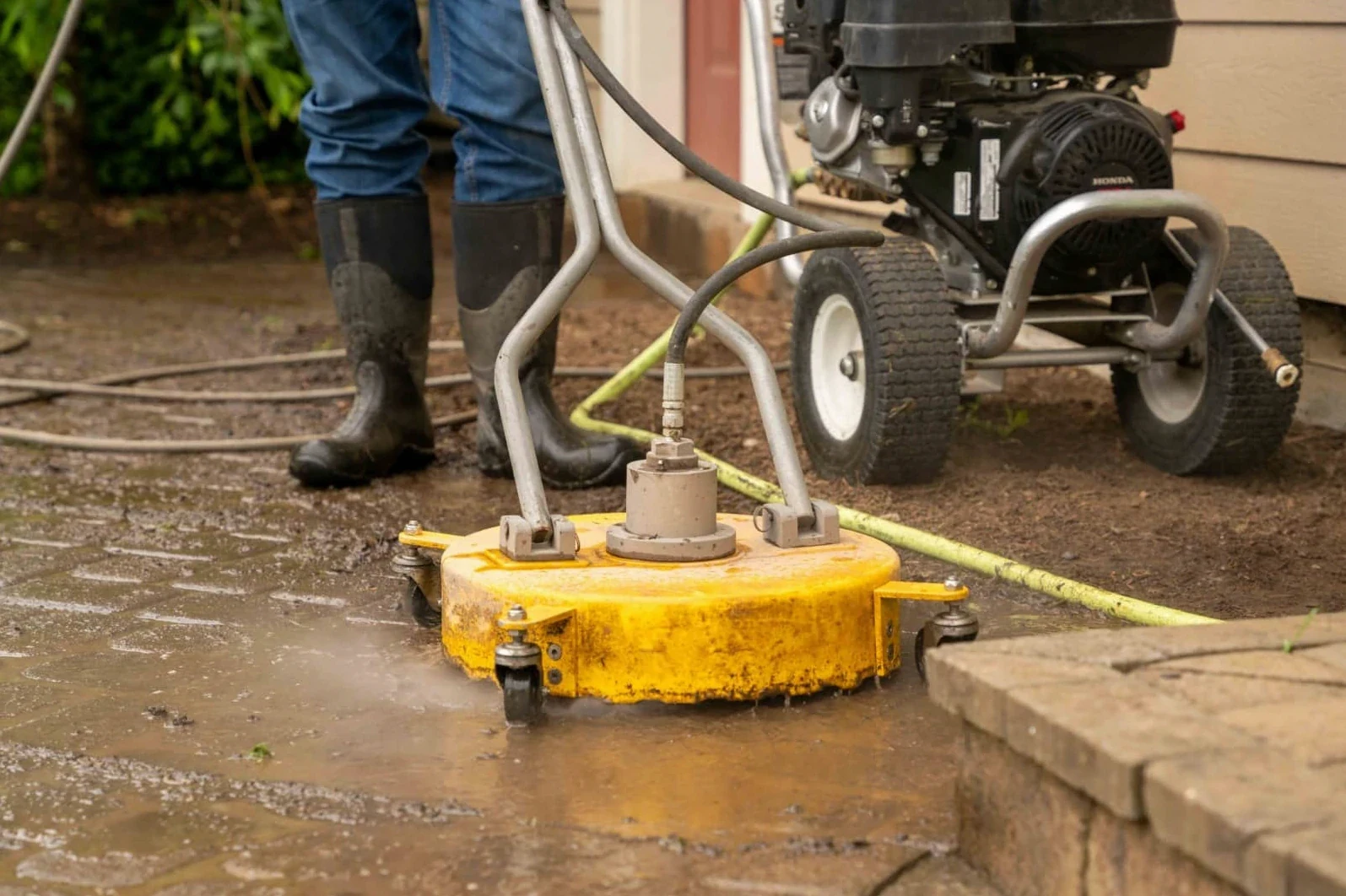
The way to avoid both is to match the nozzle and the pressure to the concrete. For most residential driveways, a wide fan and moderate pressure remove dirt without cutting into the surface. A surface cleaner, which is a spinning attachment with two or more nozzles under a shroud, covers a wider path and leaves fewer hard edges than a single wand.
If the stripe feels rougher than the concrete around it, the surface was etched, not just cleaned unevenly.
How to tell a cleaning stripe from real damage
A cleaning stripe is a difference in how much dirt is left, and it fades as the concrete dries and the remaining film settles. Real damage, such as etching or a lifted sealer, does not fade and feels different to the touch.
Here is how to check:
- Let the concrete dry completely. Cleaning stripes often look much less obvious once the surface is dry.
- Run a hand across the stripe and the surrounding concrete. If the stripe is rougher, the surface has been etched.
- Look at the edges of the stripe. A soft, feathered edge points to uneven cleaning. A hard, sharp edge points to a nozzle that was too narrow or a pass that stopped abruptly.
- Check whether the stripe follows the wand path or the shape of the slab. Wand-path stripes are a cleaning pattern. Stripes that follow cracks, joints, or old repairs are usually something in the concrete itself.
If the stripe is a cleaning pattern, it can be corrected by cleaning the whole surface again with an even pass. If it is etching, the surface needs to be allowed to dry and then evaluated. Etching cannot be washed away. It may need a topical treatment or a resurfacing product, and that is a different job from pressure washing.
What to ask before anyone washes your driveway
Ask what pressure and what nozzle will be used on your concrete, and ask whether a surface cleaner will be used instead of a single wand. Those two answers tell you more about the result than any promise about how clean it will look.
Ask how the surface will be pre-treated, if at all. A pre-treatment that is applied evenly and then rinsed evenly produces a more uniform result than spot-treating stains and washing around them. Ask whether the person washing will do a test patch in an inconspicuous area first. A test patch shows how the concrete reacts before the whole driveway is done.
Ask what happens if stripes appear. A plan for a second even pass is the difference between a fixable pattern and a call-back. Ask whether the concrete has been sealed or painted before, because that changes the approach. Ask what the surface is: bare concrete, exposed aggregate, stamped concrete, or pavers. Each one takes a different pressure and a different nozzle. Stamped concrete and pavers can be damaged by pressure that would be fine on a plain slab.
If you want a number for your driveway, it has to come from an on-site look at the surface, its age, its condition, and how much prep it needs. What moves the price is the size of the area, the condition of the concrete, whether there is a sealer or paint to deal with, and how much pre-treatment the stains need. Ask for the quote in writing and ask what it covers.
The decision: wash it again evenly, or leave it to dry first
Leave it to dry first. Most stripes that appear right after a wash are cleaning patterns, and they look far less obvious once the concrete is dry. Give it a full day, then look again in daylight. If the stripes are still sharp and the surface feels rougher in the striped areas, that is etching, and washing again will not fix it. If the stripes have softened or faded, the surface was cleaned unevenly, and a second even pass with a wider nozzle or a surface cleaner will blend them out.
Before you book that second pass, walk the driveway and note three things: where the stripes are, whether they follow the wand path or the shape of the slab, and how the surface feels under your hand. Those notes tell whoever washes it next what to change. If the stripes follow the wand, the fix is pace and overlap. If they follow the slab, the fix is in the concrete, not the cleaning.
Need pressure washing in Jacksonville? Get a free estimate.
+19049449314